The road from Ngurah Rai Airport splits early. Go north and inland to Ubud, and you trade the coast for river valleys, rice terraces, and cooler air. Stay south in Seminyak, and you arrive at beach clubs, boutique streets, and the particular pleasure of watching the sun set over the Indian Ocean. Most Bali trips come down to which road you take, and when.
Ubud vs Seminyak: The Core Difference
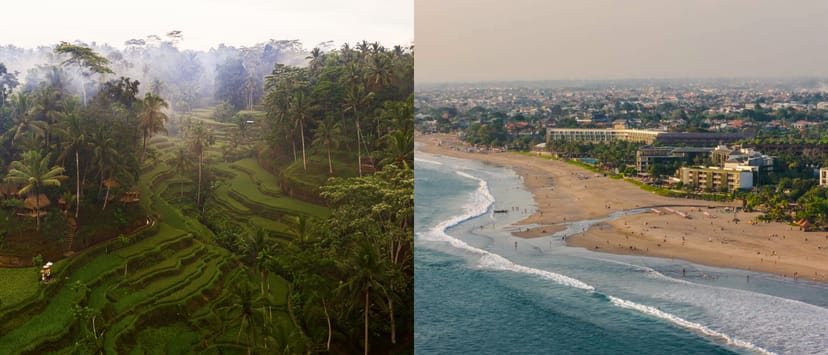
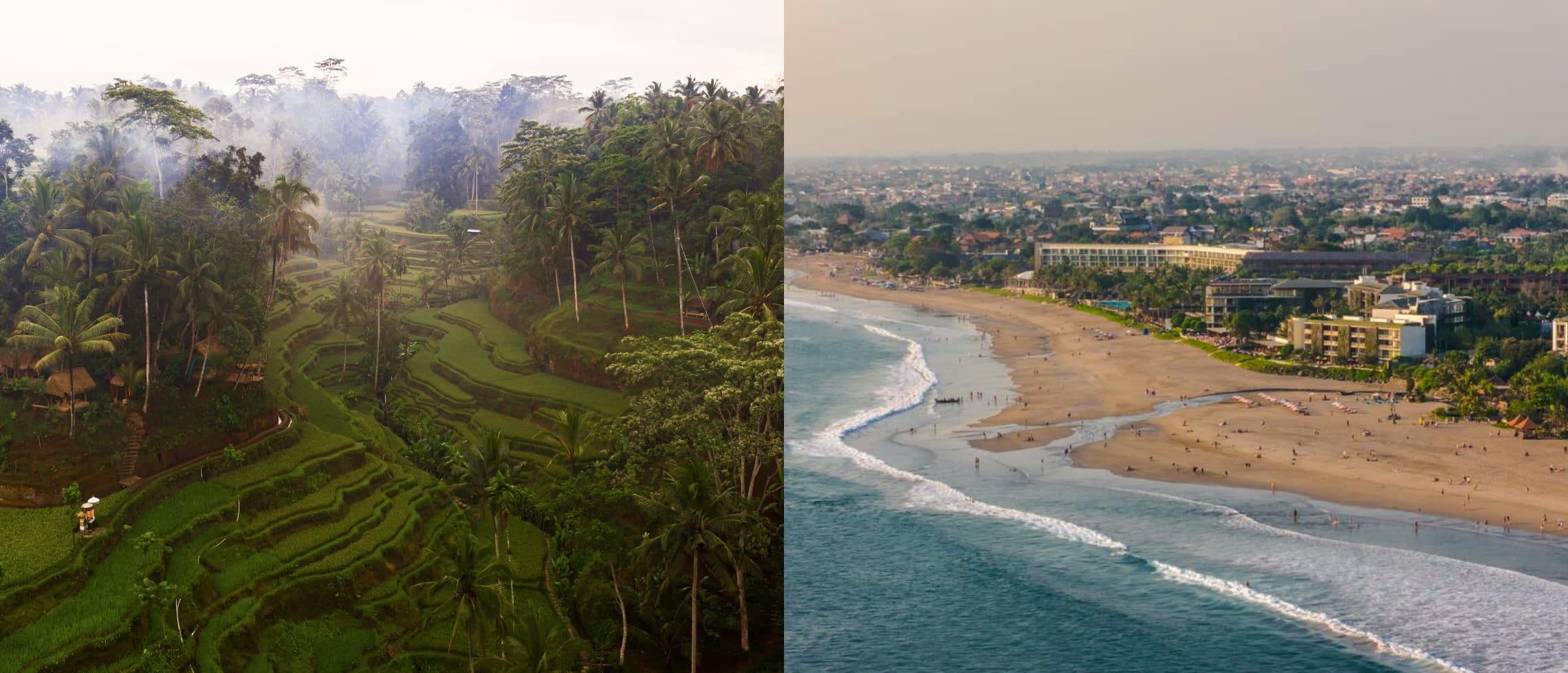
Ubud sits inland, in the hills and valleys of central Bali, surrounded by rice terraces, river valleys, and temple compounds. It's the cultural and spiritual heart of the island, built around immersion and discovery: temples, artistic traditions, and a terraced landscape that draws you in. Seminyak is coastal and west-facing, a lifestyle destination by design: beach clubs, high-end dining, boutique shopping, and a social energy that makes evenings feel like the point of the trip.
For a first-time visitor with ten or more days, doing both destinations in sequence is the more complete Bali experience. For five days or fewer, choose one and commit. Splitting your time between them and spending most of it in a car helps neither.
The Vibe: Stillness and Culture vs. Coast and Energy
The gap between Ubud and Seminyak runs deeper than beach versus jungle. Each place has a different idea of what a good day looks like.

Courtesy sergeycauselove & Grand Seminyak
Ubud: At the best jungle villas and river valley retreats, the ambient sound at night is running water, cicadas, and occasional gamelan drifting from a village ceremony somewhere in the hills. Days organize around one thing: a temple visit, a walk through the rice terraces, a meal worth lingering over. Central Ubud's town center gets packed in peak season (July to August, Christmas and New Year), with the usual crowd of vendors and tourists pressing in on the main streets. But the villas and retreats worth staying in sit well outside that noise, in forested hillsides and river valleys where the pace is unlike anything most travelers have at home.
Seminyak: The rhythm here runs from pool to beach to boutique to beach club, with dinner bookending the evening. Seminyak rewards being out. It's built for it. The strip can feel like Bali's surface rather than its substance, though pockets of local life remain. Pura Petitenget, an active Hindu temple near the waterline along Jl. Petitenget, still sees local families making offerings and taking part in ceremonies regularly. Traffic within Seminyak is some of the worst in south Bali. A five-minute drive can stretch to twenty without warning. Sometimes longer.
Our Take
Ubud is for travelers who want substance over comfort: a slower pace, genuine cultural immersion, and a landscape that rewards curiosity. Seminyak is for those who want Bali to deliver: somewhere that feels good to be in, a social energy, days that are easy in the best sense of the word. Neither is the wrong answer. They are just different trips.
Where You'll Stay: Immersed in Nature vs. Close to the Action
In both places, where you sleep is part of the decision, not just a logistics question. The two approach accommodation in completely different ways, and the gap is wide enough that the wrong choice can quietly work against the rest of the trip.

Courtesy Kamandalu & Peppers Seminyak
Ubud: Stays here fall into two categories: jungle retreats built into river valleys or forested hillsides, often with private plunge pools and a landscape that surrounds rather than decorates; and wellness retreats, where the spa, yoga, and daily schedule are the point rather than an add-on. The difference is whether you want Bali to be an experience or a recovery. Either way, a jungle villa or riverside retreat puts you well outside the town center's noise. It matters more than it sounds.
Seminyak: Stays here center on luxury private villas and design-forward boutique hotels, with most options a short walk from the beach rather than directly on it. Private pool villas are abundant and suit couples or families who want a private, enclosed stay with the coast close by. The philosophy is style, proximity, and service: a well-appointed base with Seminyak's restaurants and beach clubs always within reach. For most travelers, that's exactly what the second half of a Bali trip calls for.
Our Take
If you want where you sleep to feel like part of the experience, with a landscape that surrounds you and a soundscape that shifts through the day, Ubud is where that happens. The jungle retreats and river valley villas here aren't just comfortable; they are the point. If you want a comfortable, well-placed base to explore the coast from, Seminyak does that better.
Things to Do: Temples and Terraces vs. Beaches and Beach Clubs
Ubud and Seminyak run on different clocks. Each place has its own way of filling a day, and the two don't cross over easily.

Courtesy fgiorgio & Mari Beach Club
Ubud: The rice terraces at Tegallalang are best visited between seven and nine in the morning, before paid-pose photo vendors and tour buses take over. The Monkey Forest draws large crowds in high season; go early or arrive with realistic expectations. Tirta Empul, the holy spring temple, is worth a visit for its atmosphere and photography as well as its spiritual significance. For a more intimate purification experience, the nearby Pura Mengening temple offers a quieter setting. And beyond the terraces and temples, the days here are shaped by cultural life: cooking classes, rice paddy cycling, village ceremonies. A local tour operator is the most convenient way to arrange most of these. Almost everything rewards an early start; Ubud's best experiences thin out once the tour groups arrive mid-morning.
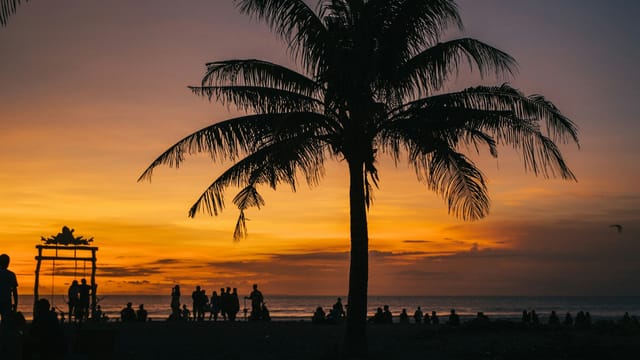
Seminyak: The beach here is built for sunsets, not swimming. The surf is strong and the currents unpredictable. This isn't a casual swim beach. What it delivers is the late-afternoon ritual: a cold drink, warm light on the water, the unhurried hour between afternoon and evening. At the most popular beach clubs, sunset spots and prime daybeds fill quickly in July and August. Reserve three to five days ahead for weekends or groups, one to two days for daytime visits. Minimum spends vary by venue and seating, starting from around IDR 500,000 (approximately USD 30) for basic seating and rising to IDR 1,500,000 or more for premium daybeds. The boutique shopping along Jl. Seminyak and Jl. Laksmana, where independent designers sell textiles and home goods, is worth a dedicated afternoon, and one of the better places in Bali to find things you won't see everywhere else.
Our Take
Ubud's activities reward early mornings and patience. Seminyak rewards a slower morning, an afternoon on the beach, and an evening that unfolds on its own. If your best travel days involve landscapes, temples, and cultural texture, Ubud is the destination. If they involve a well-chosen spot for sunset and a nightlife scene worth dressing for, Seminyak is.
The Food: Rooted in the Land vs. Open to the World
Both places eat well. What they're eating, and why, is where it gets interesting.

Courtesy Sun Sun Warung & Ku De Ta
Ubud: The farm-to-table reputation here is earned, not marketed. Several hotels and retreats maintain permaculture gardens that supply much of what reaches the kitchen. Ubud also has one of the strongest plant-based dining scenes in Southeast Asia, with dedicated vegan restaurants and cafes that treat health-conscious eating as a serious culinary pursuit rather than an afterthought. The best tables run tasting-menu format, built around locally sourced Indonesian ingredients and executed with contemporary technique. Advance reservations are strongly recommended during peak months; a more casual version of the same approach is available nearby. The range runs from that level of ambition down to family-run warungs where nasi campur has been made the same way for decades. Those warungs, frankly, are often the meal worth remembering.
Seminyak: The dining here is broader and more internationally varied, with Japanese, Italian, contemporary Indonesian fusion, and high-concept menus within walking distance of each other. The appeal is variety and atmosphere: outdoor terraces, beach-facing tables, wine lists taken seriously. Where the food comes from matters less here than it does in Ubud; the focus is on technique, range, and the pleasure of a table that makes you want to linger. The cluster of restaurants along Jl. Petitenget and Jl. Kayu Aya is the best place to find genuine Indonesian cooking done well, rather than the international menus that dominate most of the strip.
Our Take
If where the food came from and how it got to the plate matters to you, Ubud will feel like a destination in itself. If variety, atmosphere, and a well-executed menu from almost any cuisine are what you're after, Seminyak's dining scene is among the strongest in Bali.
Getting There and Getting Around
The drive between Ubud and Seminyak isn't complicated. What it takes in time is less obvious.
Ubud: The airport is approximately 35 to 37 km away, typically 60 to 90 minutes under normal conditions and up to two hours in congestion. Getting between sights on foot isn't practical in Ubud. Arranging a driver through a local travel agent gives you the most flexibility, since not every villa or hotel provides this directly, and a driver arranged this way also sidesteps the ride-hailing restrictions in certain central zones.
Seminyak: The airport is 10 to 11 km away, about 20 to 45 minutes by car. The drive between Seminyak and Ubud covers approximately 30 km and takes 60 to 90 minutes under normal daytime conditions. Google Maps estimates at the lower end of that range reflect lighter traffic hours, not the midday reality. In peak congestion, the journey can stretch to two hours. Day-tripping between the two costs three to four hours for the round trip. Roughly half a day, worth knowing before you commit to it casually. Most travelers who try it once don't try it twice.
Our Take
Seminyak is the better place to end a trip. The airport is close, the final evening stays relaxed, and there's no early alarm on the last morning. There are three other reasons to structure it that way, covered in the next section.
Who Is This Trip For?

Courtesy Ku De Ta
First-Timers
For a first visit with ten or more days, start in Ubud while the curiosity is fresh and finish in Seminyak. The temples, the terraces, and the cultural life reward the kind of attention that's easier to give at the beginning of a trip than at the end. For five days or fewer, choose one and commit. Either way, knowing which you're doing before you land matters more than most travelers expect.
Couples and Honeymooners
The question is which kind of romance fits the trip. Ubud is contemplative: private pools surrounded by jungle, spa mornings, evenings that end early and quietly. Seminyak is social romance: sunset cocktails, restaurant-hopping, the pleasure of being somewhere polished and alive together. Both are romantic, just not in the same way. For honeymooners with ten or more days, both destinations in sequence give the full range of what Bali can offer a couple.
Families
For day-to-day logistics, Seminyak is the more practical choice for families: walkable access to restaurants, private pool villas at family scale, and an environment that suits a range of ages without much planning. Seminyak's beach runs strong. It's a surf beach by nature rather than a casual swimming spot, but the beach club atmosphere and surf and swim lessons make it worthwhile for families in different ways. Ubud offers more for children to engage with directly: cooking classes, temple visits, rice terrace walks, and white water rafting on the Ayung River. Jungle retreats and river valley resorts here accommodate families without asking adults to compromise.
Wellness and Culture Seekers
Ubud is the clear choice, but the type of visit matters before you book. Travelers who want daily yoga, Ayurvedic treatments, and structured meals as a core part of the itinerary should book a retreat, not a hotel. Travelers after a good spa and farm-to-table dining within a broader cultural trip should look at Ubud's jungle villas and riverside resorts, though what's available varies considerably between stays. For culture seekers specifically, Ubud is one of the few places in Southeast Asia where artistic and spiritual life is still part of the everyday.
Can You Do Both? A Practical Split
Which First?
Ubud first, every time. Three reasons: Ubud suits the beginning of a trip when energy is high and curiosity hasn't yet been spent; Ubud front-loads the exploration, and by the time you reach Seminyak the slower coastal rhythm is exactly what the trip is ready for; and Seminyak's proximity to the airport means no rushed departure on the last day. Travelers who reverse the order often find Ubud feels rushed at the end when they're already mentally packing.
How Many Nights?
A 10 to 12-day trip is the sweet spot for most first-time visitors. Aim for four to five nights in Ubud followed by three to four in Seminyak. That gives enough time in Ubud for Tegallalang at the right hour, a temple visit, and at least one dinner worth planning around. In Seminyak, there's time for the beach club ritual, a shopping afternoon, and two or three meals worth returning for. For a seven-day trip, three nights in each works but is tight. For five days or fewer, don't split. Choose one.
Planning Your Bali Trip
Ubud asks you to wake up early and go looking for something. Seminyak asks you to show up in the afternoon and let the evening find you. The contrast between the two isn't incidental. Together, they cover most of what makes a Bali trip feel complete in a way that either place alone rarely does.
Once you have a sense of which direction suits you, or if you have questions about either destination, speak with one of our specialists and we will help you plan the rest.